- Session time45–60 minutes
- AnaesthesiaTopical / cold
- DowntimeNone
- Course3–4 sessions, 4 weeks apart
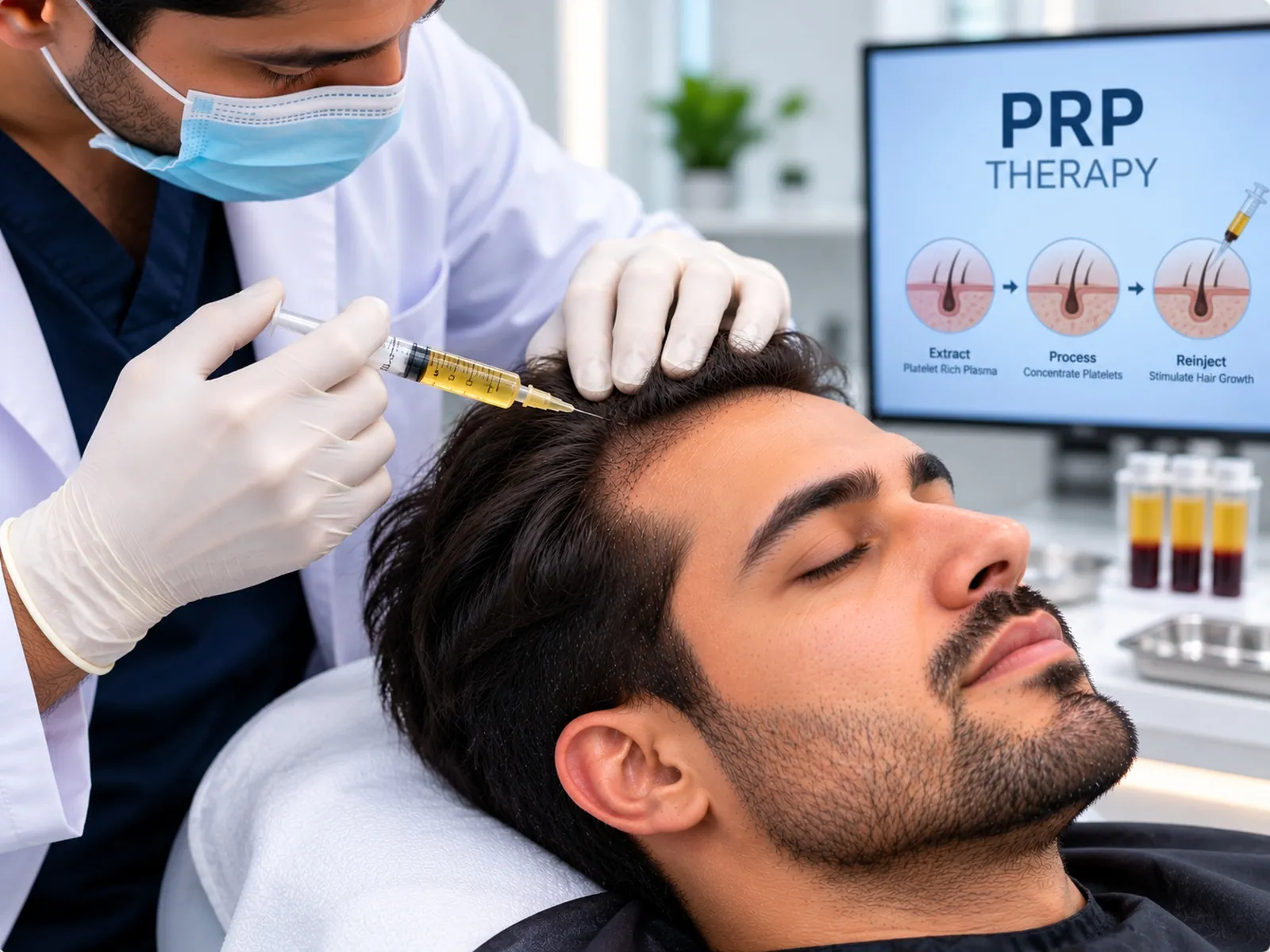
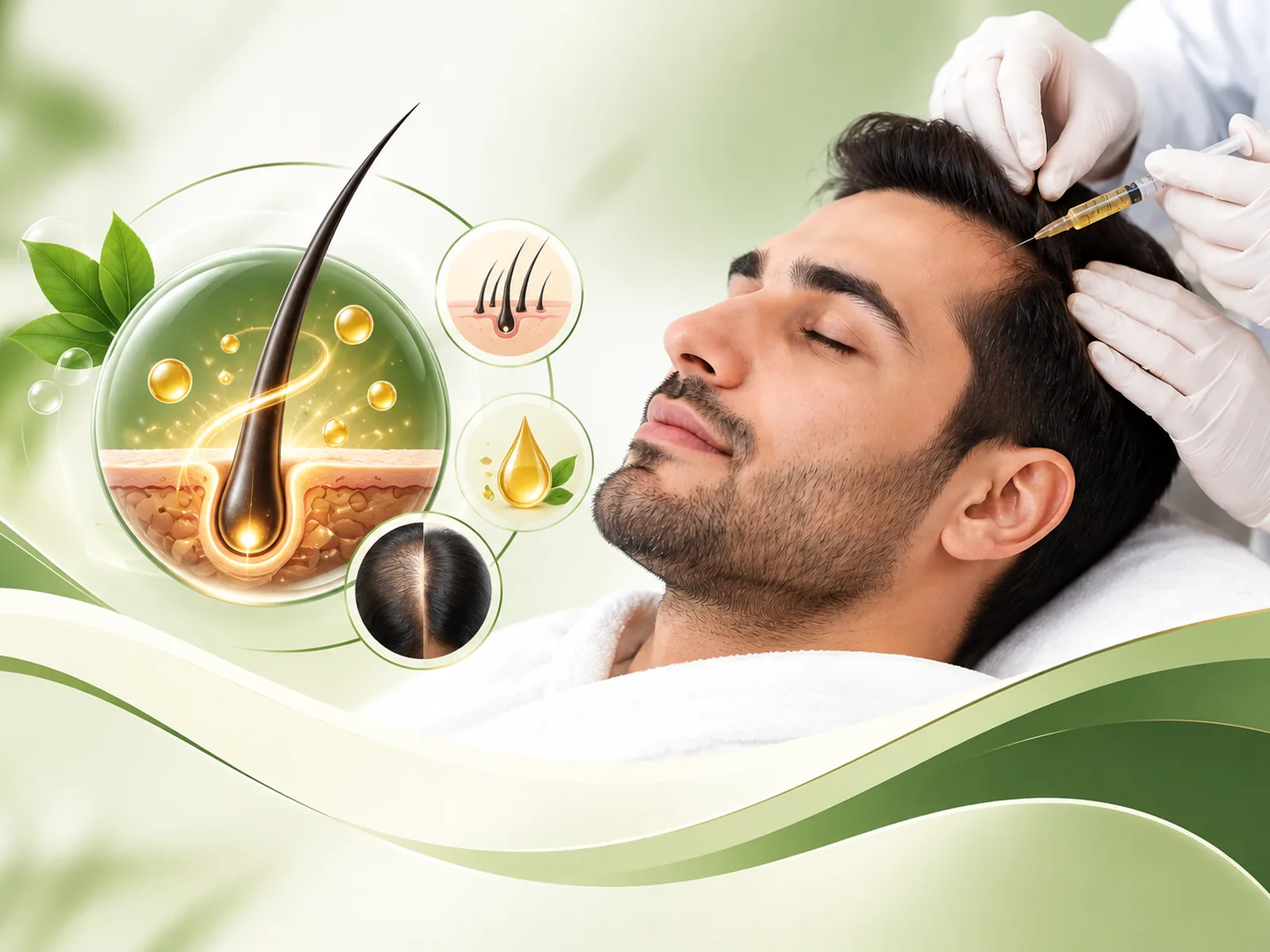
GFC (Growth Factor Concentrate) is prepared from your own blood like PRP, but the growth factors are extracted and concentrated so that only the active component is injected. The result is a more consistent dose per session, fewer sessions and less post-treatment soreness. At Glow & Go Aesthetic Clinic GFC is prepared in a closed, sterile kit and injected by the doctor.
Who Is GFC Hair Therapy For?
- Early to moderate hair thinning in men and women
- Patients who found PRP uncomfortable or inconsistent
- Protecting native hair around a transplant
- Diffuse shedding after illness, stress or post-partum
Suitability is confirmed only after a consultation and examination with Dr. Naresh Wadhwa.
How GFC Hair Therapy Works
Blood draw
A small sample is collected into a dedicated GFC kit.
Activation & extraction
Platelets are activated and the growth factors separated — no platelets or cells are injected.
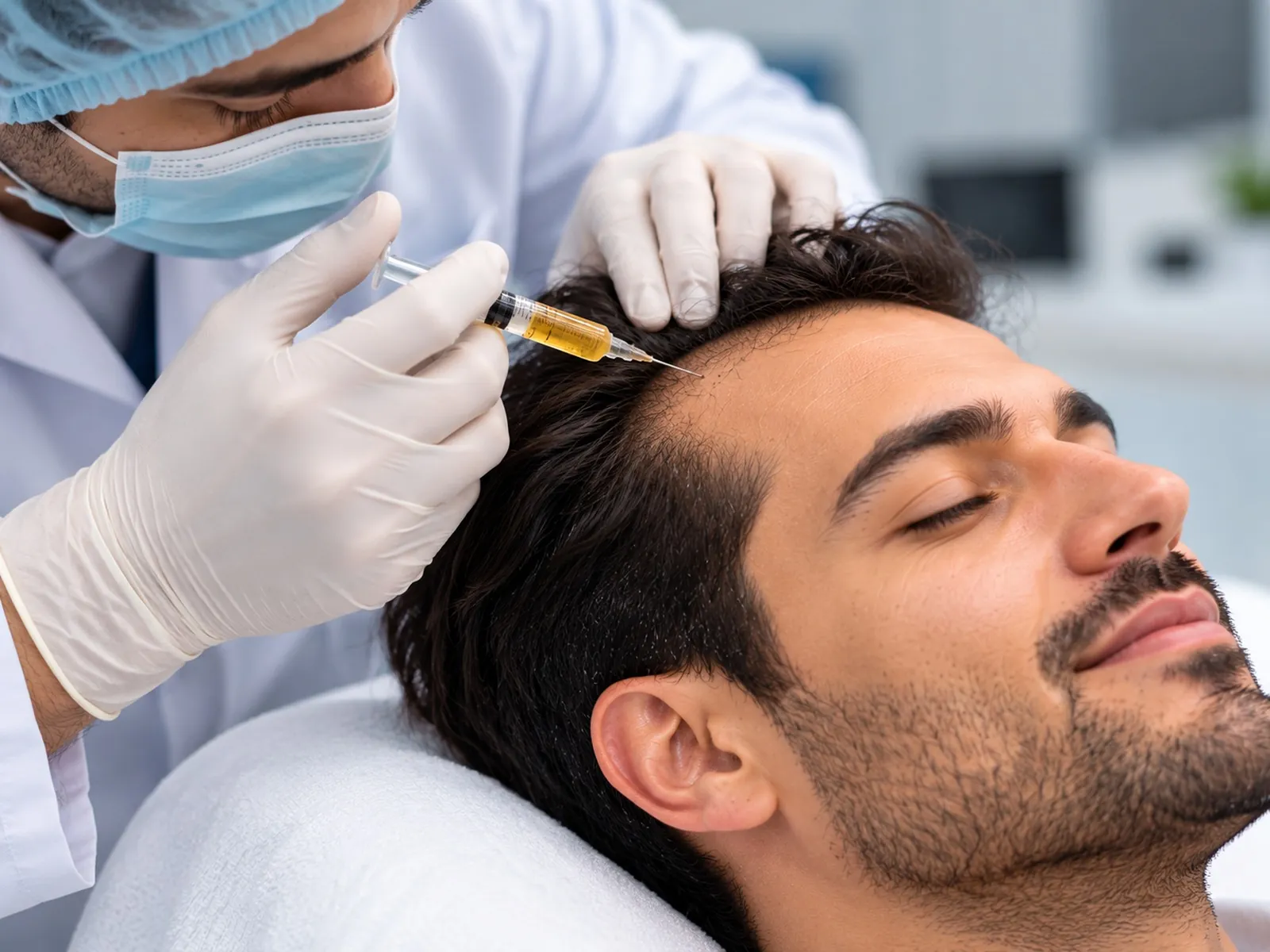
Injection
The concentrate is placed into the thinning areas with a fine needle.
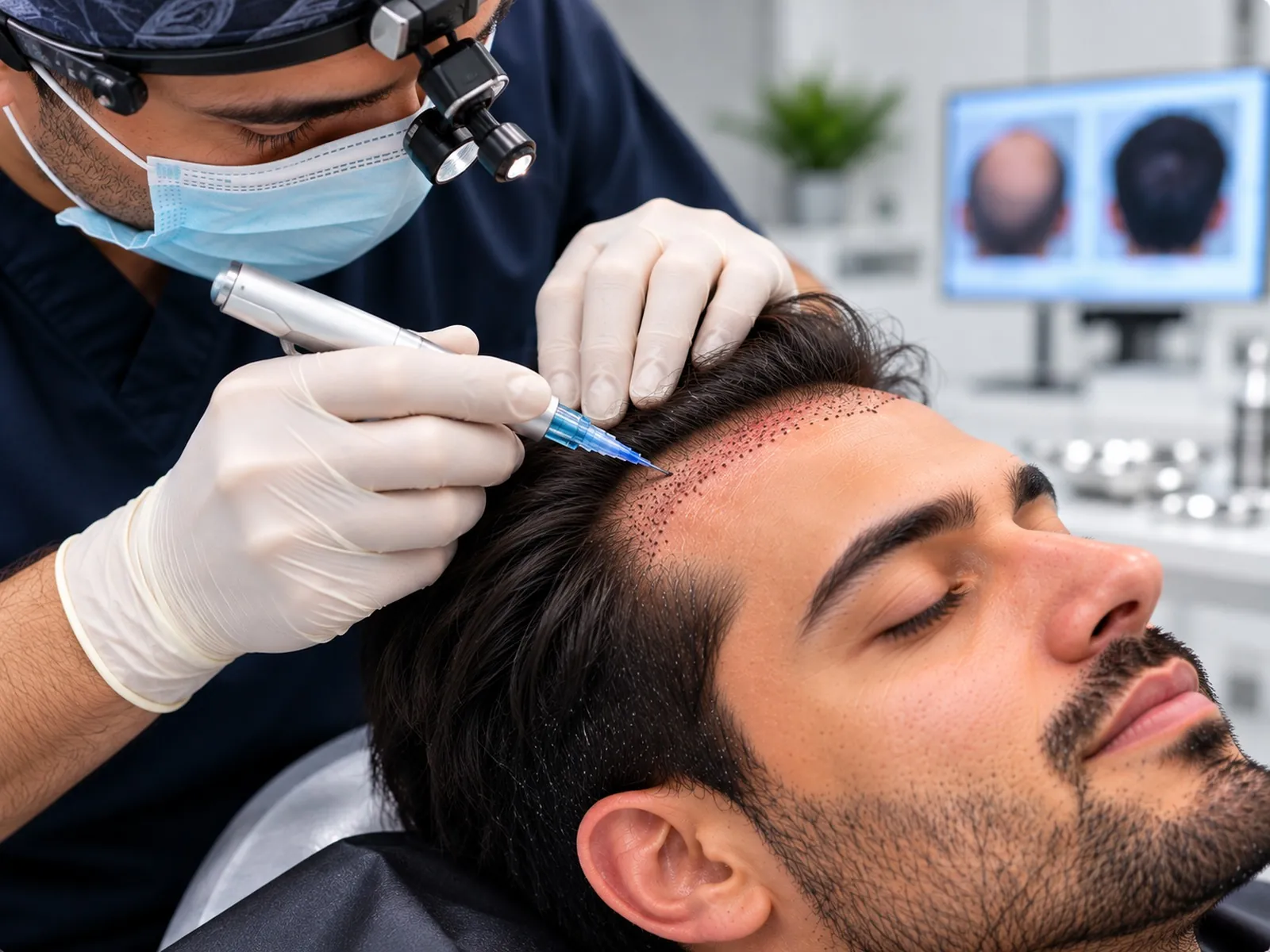
Review
Standardised photographs at each visit track density and shedding.
Recovery & Aftercare
There is no downtime. Avoid washing the scalp for 12 hours and strenuous exercise for a day. Mild tenderness settles within hours. Results are assessed after the third session.
Why Choose Glow & Go for GFC Hair Therapy in Virar
- Closed sterile kit prepared on site
- Injected by the doctor, not a technician
- Fewer sessions and less discomfort than classic PRP
- Combined with medical therapy for a complete plan
GFC Hair Therapy FAQs
GFC or PRP — which is better?
GFC delivers a higher and more consistent concentration of growth factors with less discomfort, so most patients need fewer sessions. PRP remains a good, economical option. We recommend based on your pattern and budget.
How many sessions will I need?
Usually three sessions four weeks apart, then a maintenance session every 4–6 months.
Is it painful?
Less than PRP — the preparation is acellular, so there is less inflammation and soreness afterwards.